
AEKO: Building a Distinct Layer-1 Network
AEKO began from an established execution model, but a new name was never going to make it a new product. I worked across the chain itself and the products around it to give AEKO a reason to exist: people can build social applications, exchange value, discover on-chain activity and develop against an independently operated network.
Built AEKO-specific social and economic capabilities while bringing its network, Explorer and developer experience together.
My role: Core blockchain and product engineer
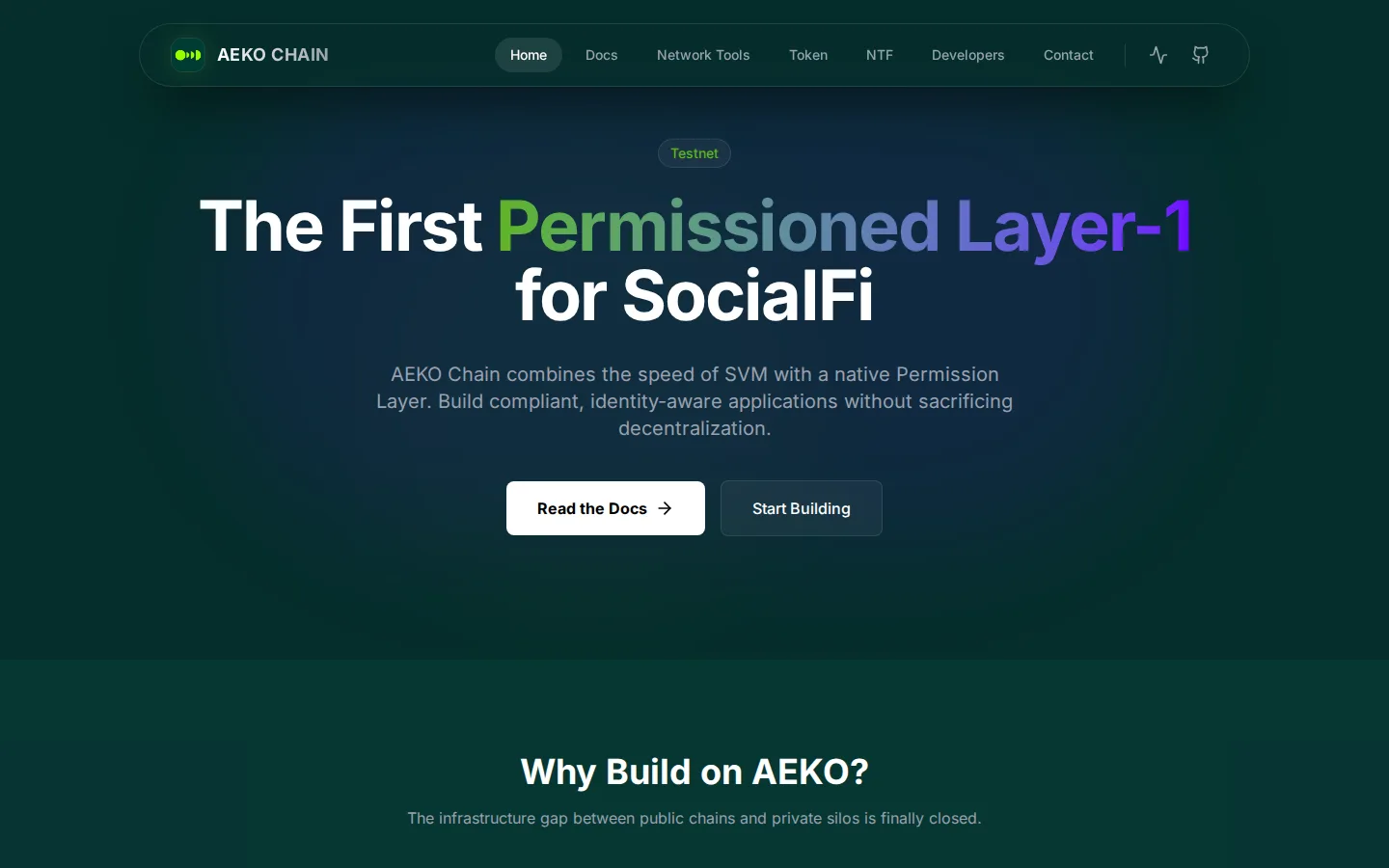 Public interface preview
The challenge
A renamed blockchain inherited a capable transaction engine but lacked its own product identity, useful social behavior and a dependable way for developers and operators to run it. Parts of the test network initially produced no blocks; essential activity could not reliably reach wallets or the Explorer.
The part I led
I worked at the heart of the AEKO implementation, from native SocialFi functionality and protocol-level economic and permission systems to validator operations, Rust services, the Explorer, web applications, command-line tools and deployment. I took problems across system boundaries rather than treating chain code and user-facing products as separate jobs.
The result
AEKO now has native foundations for identity, posts, engagement, creator rewards, staking and payments, alongside its own protocol capabilities, public-facing Explorer, funding controls and developer studio. I also traced and resolved the zero-block network failure so transactions could confirm and be seen. This is a functioning AEKO-specific Layer-1 effort built on Solana-derived technology, not a claim that I invented the underlying consensus design or that every capability has reached mature mainnet scale.
The decisions and work behind it
- Designed and implemented AEKO-specific social behavior and creator-economy flows inside the network, rather than building a social app that merely stores transactions elsewhere.
- Extended the chain's protocol with token, permission and security capabilities while addressing safe upgrades that preserve existing network history.
- Diagnosed an actual deployment where the network produced no blocks, then restored block production, RPC access and visible confirmed transactions.
- Built the product surfaces around the network: Explorer and its persistent data, wallet and funding experiences, developer SDKs, CLI tooling and Contract Studio.
- Worked across Rust, Axum, Next.js, deployment and testing to make the protocol usable by the people building on it and operating it.